After a tree comes down, many property owners assume the hard part is over. But then the stump is still there, right in the middle of the yard, looking awkward and getting in the way. It can become a tripping hazard, attract pests, make mowing harder, and keep you from fully using the space. That is why stump grinding is often the next step after tree removal.
If you have never had it done before, it is normal to wonder what the process actually looks like. People usually picture a fast job with a big machine and a lot of noise, which is not totally wrong, honestly. But there is a bit more to it than that. Knowing what to expect during the stump grinding process can help you prepare the area, understand the timeline, and avoid surprises.
What Is Stump Grinding?
Stump grinding is the process of mechanically grinding a tree stump down below ground level using a specialized machine. Instead of pulling the whole root system out of the ground, the machine chips away at the visible stump and part of the root flare until the remaining wood sits low enough to be covered with soil or mulch.
This method is usually less invasive than full stump removal. It avoids tearing up large sections of the yard, and in many cases, it is the more practical option for homeowners who want the stump gone without major landscape disruption.
Why Property Owners Choose Stump Grinding
There are a few common reasons people choose stump grinding after tree removal. First, it improves the appearance of the yard. A leftover stump can make the space look unfinished. Second, it makes the area easier and safer to use. You do not have to mow around it, step over it, or work around it when planning landscaping changes.
It also helps reduce the chance of decay-related insect activity. Old stumps can attract termites, ants, beetles, and fungi over time. Not every stump becomes a pest issue, but it can happen, especially when the wood starts breaking down.
The First Step: Site Inspection
Before any grinding begins, the area usually needs to be inspected. This step matters more than people expect. The size of the stump, the tree species, the condition of the wood, and the location all affect how the job will be handled.
The operator will often check for nearby structures, fences, sidewalks, irrigation lines, landscaping features, and utility concerns. Surface roots may also be reviewed, especially if they are large or spreading into nearby lawn areas.
This is also when access is considered. The stump grinder is a piece of equipment that has to reach the work area safely. A wide open front yard is usually easy. A narrow backyard gate, steep slope, or tight corner can make the job more complicated.
Preparing the Area
Once the site is reviewed, the area around the stump usually needs to be cleared. Rocks, branches, planters, decorations, and other obstacles should be moved if they are close to the stump. This helps the operator work more safely and reduces the chance of damage.
It is also a good idea to keep children and pets away from the work zone. Stump grinding involves a powerful machine, flying wood chips, dust, and noise. Even though it is a routine job for trained crews, it is not something you want people wandering near.
Sometimes a protective barrier is used to help contain debris. That depends on the stump location and how close it is to windows, vehicles, or nearby structures.
How the Grinding Process Works
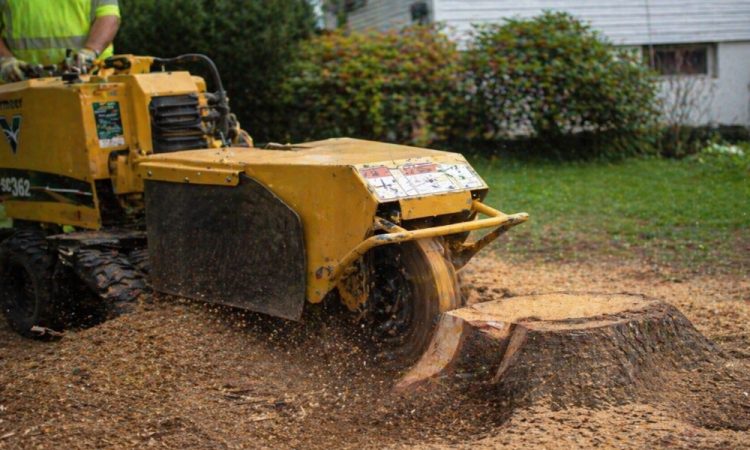
The actual grinding is done with a machine that has a rotating cutting wheel with strong teeth. The operator moves that wheel back and forth across the stump, gradually shaving it down into small wood chips.
The machine does not usually remove the entire root system. Instead, it grinds the stump and a portion of the upper roots below the surface. In many residential jobs, the stump is ground several inches below grade, often deep enough for topsoil and grass to go over the area later.
The process can be surprisingly fast for smaller stumps. Larger hardwood stumps, of course, take longer. The age of the stump also matters. Some old stumps are softer and easier to grind, while others are dense and stubborn.
What the Area Looks Like Afterward
A lot of people expect the stump to disappear and leave a clean patch of dirt behind. That is not usually what happens right away. After grinding, there is often a pile of wood chips, soil, and shredded stump material left in the area. This is normal.
Those grindings can sometimes be reused as mulch in landscape beds, though they are not always ideal for every purpose. Some property owners keep them, and others prefer to have them removed. That part often depends on the size of the stump and future plans for the space.
Below the surface, the main stump mass is reduced, but the deeper roots remain underground and will slowly break down over time. That is one reason stump grinding is different from complete stump removal.
Will the Yard Be Damaged?
Some minor surface disturbance is common, especially around the stump itself. The machine may leave marks on the lawn if the soil is soft or if access is tight. There may also be shallow depressions later as underground roots decay.
Still, stump grinding is usually much less disruptive than digging out the entire stump and root ball. Full removal often requires heavier excavation and can leave a much larger hole in the yard. Grinding is often chosen because it solves the main problem without creating a much bigger one.
What Happens Next?
After the grinding is done, the next steps depend on what you want to do with the area. If you want grass there, the hole can usually be filled with soil and seeded or sodded. If you want to replant, add a garden bed, or install hardscaping, the site may need a little more preparation first.
It is worth remembering that planting a new tree directly in the exact same spot is not always ideal. The remaining roots and leftover wood below ground can make that harder. In many cases, it is better to plant slightly to the side if space allows.
How Long Does Stump Grinding Take?
Smaller stumps may only take a short time to grind. Larger stumps or multiple stumps can take longer, especially if they are located in difficult areas. The setup, inspection, cleanup, and access all add to the total time.
So yes, the grinding itself may be quick, but the full visit is usually more than just a few minutes of machine work.
Final Thoughts
Stump grinding is a practical way to clear a yard, improve safety, and make outdoor space easier to use after tree removal. The process is fairly straightforward, but it still helps to know what is involved. There will be noise, debris, equipment, and some cleanup afterward. That is all part of the job.
The good news is that stump grinding is usually much faster and less disruptive than many people expect. Once it is done, the yard feels more open, more usable, and a lot more finished. And honestly, that leftover stump is usually more annoying than people realize until it is finally gone.
This post was written by a professional arborist at Tree Service Company Largo FL. Robert Miller is the owner of Arbor Wise Professional Tree Care, a locally owned and operated tree service company that offers superb lawn care by the most experienced Arborists. Arborwise Tree Services is a tree removal company that offers stump removal, tree pruning, stump grinding, fertilization, and tree restoration. We have an extraordinary lawn care industry notoriety covering the Pinellas county area.