Rural properties occupy a specific and often underappreciated position in the UK’s flood risk picture. They are disproportionately represented in medium and high flood risk zones, frequently located near watercourses, in low lying ground, or on land where agricultural drainage has deteriorated over decades. They are also further from emergency services, further from equipment hire companies, and more likely to have access routes that become impassable in precisely the conditions that cause flooding.
A rural homeowner or farmer waiting for emergency assistance or a hired pump during an active flood event may be waiting considerably longer than an urban equivalent, and by the time help arrives the damage is done. Owning the right pump, tested and ready, before winter begins is the most practical form of flood protection available to anyone in a rural location.
Why Rural Properties Face Higher Flood Risk
The flood risk factors that affect rural properties are different from those that affect urban ones. Surface water drainage infrastructure is typically less extensive in rural areas, meaning heavy rainfall runs off fields and hard standings without the same level of management available in urban drainage systems. Properties near rivers and streams in rural catchments are exposed to watercourse flooding that urban flood defences may have reduced significantly in towns and villages but which remain largely unmitigated in the open countryside. Agricultural drainage systems, where they exist, are often decades old and may perform poorly during sustained heavy rainfall of the intensity that UK winters are increasingly producing.
Groundwater flooding is a particular concern for rural properties in certain geology types, where a wet autumn and winter can raise water tables to levels that cause water to push through floors and walls from below. This type of flooding is slow to develop and slow to recede, which means a pump working continuously through a sustained wet period rather than deployed for a few hours in response to a single event.
The Problem With Relying on Hired Equipment
Pump hire is a reasonable option for an occasional, predictable need. It is not a reliable option for winter flood response. During significant flood events, which tend to affect multiple properties and multiple areas simultaneously, hire company stocks are rapidly depleted. Lead times that are perfectly acceptable in normal conditions become unworkable when water is actively rising. The equipment that is available may not be the right specification for the property or the water type being handled. And every hour the right pump is not in place is an hour during which water is doing damage that might have been prevented.
A pump owned and stored at the property, tested before winter and confirmed as operational, eliminates all of these variables. It is there when needed, in the specification appropriate for the property, with the hose runs already planned and the discharge route already confirmed. The upfront cost of ownership is typically recovered many times over if a single significant flood event is managed more effectively as a result. The full range of flood defence and emergency pumps covers both submersible automatic sump pumps for permanent installation and portable high flow options for active flood response at rural properties.
Specifying the Right Pump for a Rural Property
Rural flood response typically demands higher flow rates and more robust construction than domestic urban applications. A farm building, outbuilding, or cellar that floods can accumulate water quickly, and a pump that is marginal for the task will struggle to keep pace with inflow during a sustained event. The pump must handle water containing silt, sediment, organic material, and debris without suffering rapid impeller wear, which means a dirty water or solids handling rated pump rather than a standard clean water model.
Power supply independence is also considerably more important in a rural context. Mains power outages during storms are common in rural areas, and a flood pump that stops working when the power goes out at the moment it is most needed provides no useful protection. Petrol driven pumps operate entirely independently of the mains supply and are the most resilient option for rural emergency flood response, capable of running continuously for hours from a manageable fuel supply. A range of petrol engine driven pumps covers the high-flow, power-independent options most suited to rural flood response across a range of sizes and output levels.
Agricultural Buildings and Livestock Protection
For farms and agricultural properties, flood protection extends beyond the dwelling to cover livestock housing, feed stores, machinery, and other buildings where flood damage has immediate operational and financial consequences. A flooded livestock building in the middle of winter presents an animal welfare emergency as well as a property damage problem, and having the means to pump water from livestock housing rapidly is an operational necessity rather than a precautionary measure.
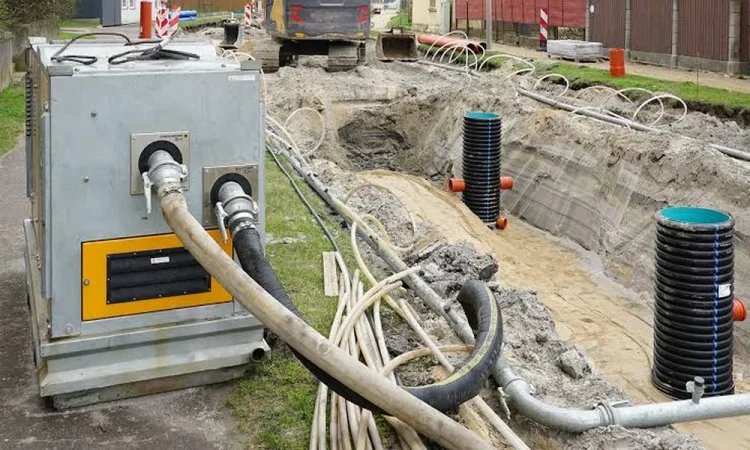
Agricultural flood pumping typically requires higher flow rates than domestic applications given the larger floor areas involved. Engine driven pumps with large bore inlet and outlet connections, matched to appropriate suction and discharge hose assemblies, are the practical specification for this duty. Planning the deployment of these pumps across the farm’s most vulnerable buildings before winter, including confirming where the pumps will be positioned, where discharge hose will run, and where water will be directed, means the response when it is needed takes minutes rather than the confused improvisation of an unprepared emergency.
Frequently Asked Questions
How do I check if my rural property is at flood risk?
The Environment Agency’s long term flood risk checker at check-long-term-flood-risk.service.gov.uk provides surface water, river, and groundwater flood risk ratings for any address in England; equivalent tools are available through Natural Resources Wales and SEPA in Scotland.
Can one pump protect an entire farm from flooding?
A single pump can protect the highest-priority location, but larger farms with multiple vulnerable buildings typically need more than one pump positioned at different points to provide meaningful coverage across the full property during a significant flood event.
Why is a petrol pump better than a mains pump for rural flood response?
Rural areas experience mains power outages more frequently than urban areas during storm events, and a flood pump that loses power at the moment it is most needed provides no protection; petrol pumps operate independently of the grid throughout the flood event.
How often should a rural flood pump be tested?
Testing every three months by running the pump under load for several minutes confirms it starts reliably and delivers expected output; a pre-winter test in October is the most critical, with a check of fuel freshness and oil level at the same time.
Final Thoughts
For rural property owners and farmers, a flood pump is not optional equipment: it is one of the most cost effective risk management investments available given the combination of higher flood exposure, reduced emergency response availability, and the operational consequences of water damage in agricultural settings. Owning the right pump, tested and ready before the winter risk season, provides a level of protection that no hire arrangement or emergency response plan can reliably match.
Specialist suppliers of flood pumps and emergency drainage equipment can advise on the right pump specification for any rural property type and flood risk scenario.