In the West Valley, a home’s electrical system works hardest during the very months when heat makes that work most difficult. Copper carries current less comfortably as it warms. Breakers react to the temperature around them. Plastic insulation slowly stiffens after years inside attics that pass 140 degrees. None of this appears on a utility bill. It shows up instead as a breaker that trips at 4 p.m., an outlet cover that feels warm, or a condenser that hums but never quite starts.
Electricians who have worked in Glendale for decades, such as the licensed team at Arrowhead Electric, tend to describe desert wiring problems by location rather than by symptom, because the hottest corners of a house are usually where trouble begins. Following that same path, from the meter on the outside wall to the equipment in the backyard, is a practical way for any homeowner to see where summer stress builds up.
The walk below starts where power enters the house and ends where monsoon storms can send it surging back in.
Starting at the Wall That Faces the Afternoon Sun
Many older tract homes around Glendale and Peoria have the meter and main panel mounted on a west or south wall. By late afternoon, that metal enclosure can be far hotter than the air around it.
This matters because most residential breakers trip in two ways. A magnetic trip handles sudden short circuits. A thermal trip handles slow overloads, using a small metal strip that bends as it heats. When the sun has already warmed that strip, it needs less extra current to reach its trip point.
The result is a familiar pattern. A breaker that never trips in January starts tripping on the hottest July afternoons, usually when the air conditioner, a dryer and a kitchen appliance all run at once. That is not always a faulty breaker. Often it is heat plus load plus a panel sized decades ago, before pool pumps and EV chargers joined the circuit list.
Inside the Attic Oven
Most branch wiring in a single story Arizona home runs through the attic. Cable insulation is rated for high temperatures, but the electrical code still reduces how much current a conductor may carry when the surrounding air is extremely hot.
The bigger issue is movement. Every day, attic connections heat up, expand, cool overnight and contract. Over many summers, this thermal cycling loosens screw terminals and splices inside junction boxes. A loose connection creates resistance, resistance creates heat, and the cycle feeds itself.
Desert attics add one more problem: pack rats and roof rats chewing cable jackets.
Warning signs from attic wiring tend to look like this:
- Lights dimming in one room when the air conditioner or a hair dryer starts
- Switch plates or outlet covers that feel warm to the touch
- A faint smell of hot plastic near ceiling fans or recessed lights
- A breaker that resets fine but trips again within days
The Electrical Safety Foundation International keeps a useful set of home electrical safety resources for homeowners that explains these devices and warning signs in plain terms,.
The Garage Carries More Load Than It Used To
Garages in the Valley regularly sit above 110 degrees in summer. A garage freezer runs its compressor almost constantly, often through an extension cord never meant for continuous duty.
Electric vehicles add a newer layer. A Level 2 charger counts as a continuous load, so the circuit has to be sized with extra headroom beyond the charger’s rating. A 40 amp charger, for example, typically needs a 50 amp circuit. Charging overnight, when the garage is cooler and household demand is lower, eases strain on the panel.
Out by the Condenser
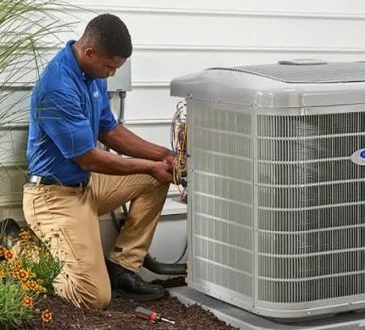
The air conditioner is the largest single load in most Arizona homes. When its compressor starts, it briefly pulls several times its normal running current. That surge passes through the outdoor disconnect box, the flexible conduit leading to the unit, and the contactor inside it.
Each of those parts sits in direct sun. A slightly loose lug at the disconnect can overheat and brown the surrounding plastic long before anything fails outright. The nameplate on the condenser lists the maximum breaker size the unit allows, and a mismatched breaker, whether too large or too small, creates its own risks.
Pool Equipment and Corrosion
Summer pool pumps often run eight hours a day or more. Pool equipment pads combine water, chlorine fumes and heat, which slowly corrode breakers, timers and subpanel enclosures. Rust inside a pool subpanel, a GFCI that trips without a clear cause, or a tingling feeling near the water are signals to shut equipment off and call a licensed electrician.
When Monsoon Storms Reverse the Flow
Arizona’s monsoon season brings lightning, dust storms and sudden outages. When utility power drops and then snaps back, or when lightning strikes nearby, voltage spikes travel through service lines into the home. Smart thermostats and variable speed pool pumps are especially sensitive.
Newer editions of the National Electrical Code call for surge protection when a home’s electrical service is replaced or upgraded, and many Valley homeowners now add a whole home surge device at the panel even without a full upgrade.
Personal safety matters as much as equipment. The National Weather Service’s guidance on staying safe from lightning indoors explains how a strike can travel through wiring and plumbing, and why corded devices should be avoided during a storm. Portable generators used during outages should connect only through a proper transfer switch, never by backfeeding a dryer outlet, which can energize utility lines and injure line workers.
Reading the House Before the Next Summer
The smartest time to look at desert wiring is not July, when every electrician in the Valley is booked. It is between October and April, when attics are bearable, panels are cool enough to inspect closely, and last season’s monsoon damage is still visible.
A home’s electrical system rarely fails in one dramatic moment. It wears down in the same places, summer after summer, from the sun baked panel to the attic splice to the corroded box beside the pool. Knowing where those places are turns a reactive repair into a planned one, and gives a household one less thing to worry about when the thermometer climbs past 110 again.